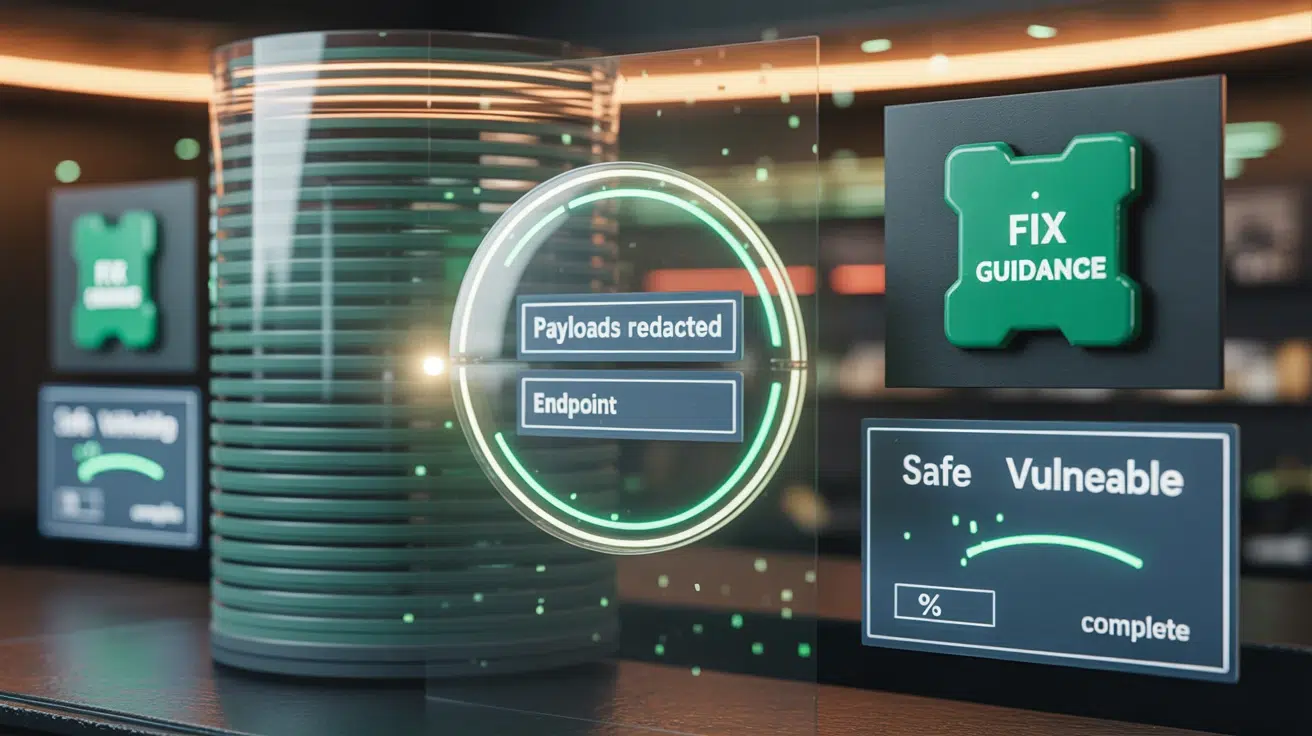
SQL Injection Scanner is a security tool. It sends malicious code and complex input to your website or app to check if it can fool the database. It monitors how pages respond on the backend and detects weak spots (unsecured forms or links) and reports clear solutions so you can lock things down quickly.
How SQL Injection Scanner finds Vulnerability:
The scanner fills forms and URLs with special test text, looks for strange errors or unexpected data, and measures the timing of responses. If the site behaves strangely, the scanner marks it as vulnerable.
Scanner workflow (diagram):
What does a SQL injection vulnerability scanner detect?
- Inputs not cleaned or checked (unsafe text goes straight to the database)
- Error pages that reveal database details
- Login forms that can be tricked to skip passwords
- “Blind” clues: odd timing or different page content
- Unsafe query building (no parameterized queries)
- Risky database functions used without care
Why SQL Injection Remains a Top Threat in 2025

- OWASP picture (latest public data): In OWASP’s Top 10 (2021), “Injection” had ~3% average incidence across apps and ~274,228 occurrences—and SQLi is part of that bucket. A new Top 10 is due in 2025; there isn’t an official 2024 Top 10 release.
- CWE Top 25 (2024): SQL injection (CWE-89) ranked #3 most dangerous weakness. That’s high risk, year over year.
- CVE reality check (2024): About 40,187 CVEs were published in 2024. Vendor analyses estimate ~2,400 of those involved SQLi—roughly ~6%. (See the table/graph above.)
- Big-name examples: 2024 advisories show fresh SQLi flaws (e.g., Fortinet CVE-2024-33501). If leaders get hit, anyone can.
💡 Tip: A simple line like this helps readers get it fast:
“SQL injection made ~6% of all CVEs in 2024 (NVD total; vendor estimate for SQLi count).”
Why it stays risky (plain words): Teams still build queries the unsafe way, skip checks on user input, or forget safer patterns like prepared/parameterized queries—so the door stays open. (OWASP’s injection guidance warns about exactly this.)
Data note (clear and honest): OWASP hasn’t published a “Top 10: 2024.” We cite OWASP’s 2021 stats plus MITRE/NVD 2024 data and reputable summaries to show today’s risk.
Sources: OWASP Top 10 & Injection page; MITRE CWE Top 25 (2024); NVD/NIST; Aikido SQLi trend report; Fortinet CVE.
More Read: NoSQL Injection: Complete Guide to Risks & Prevention 2025
How a SQL Injection Vulnerability Scanner Works
Fast flow:
- Payload generation → 2) Request injection → 3) Response analysis → 4) Report
Step-by-step:
- Payload generation: The scanner creates safe, tricky inputs (like
' OR 1=1 --) to test your forms and URLs. - Request injection: It sends these inputs just like a real user would (clicks, POST/GET, headers, cookies).
- Response analysis: It checks for odd errors, strange content, login skips, or slowdowns that hint at SQLi.
- Report: It lists risky endpoints, shows proof (requests/responses), and suggests simple fixes.
Dynamic vs Static SQL Injection Scanner
- Dynamic (DAST): Tests the running app from the outside. Acts like a user, no code needed. Great for finding real-world holes.
- Static (SAST): Reads the source code. Spots unsafe query building before you deploy. Great for early catches.
Common Detection Techniques (Blind, Time-based, Error-based)
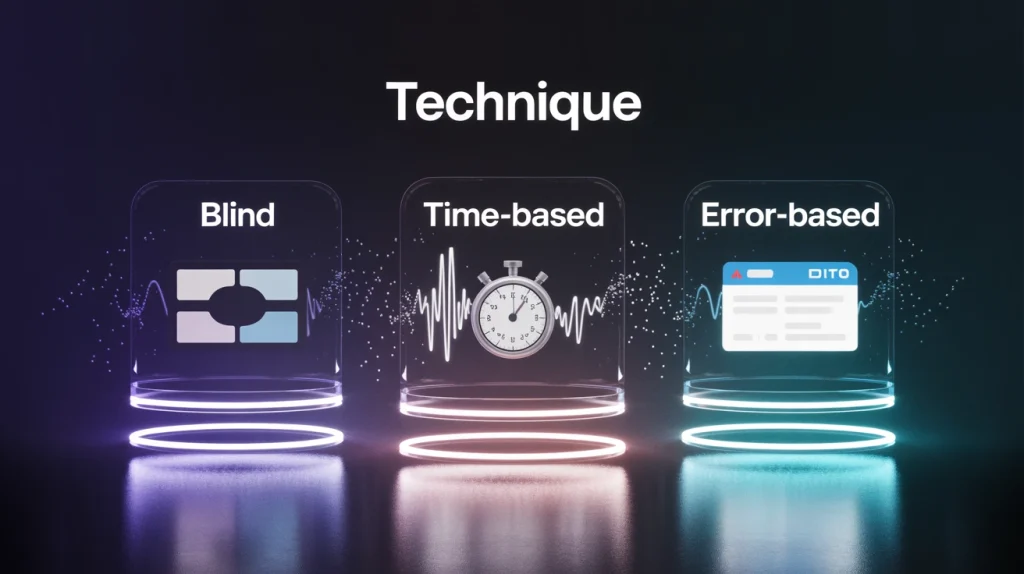
- Blind: Looks for content changes (even without visible errors). If a tiny input changes a page’s answer, that’s a clue.
- Time-based: Uses inputs that should delay the database. If the page slows on command, injection may be possible.
- Error-based: Triggers clear error messages (like SQL syntax errors). If the app reveals database details, that’s risky.
Mini tip: Always use parameterized queries and input validation. It’s like putting a strong key and a doormat that wipes off the mud—both matter.
Case Study: Real SQL Injection Scanner Results (Hands-On Test)
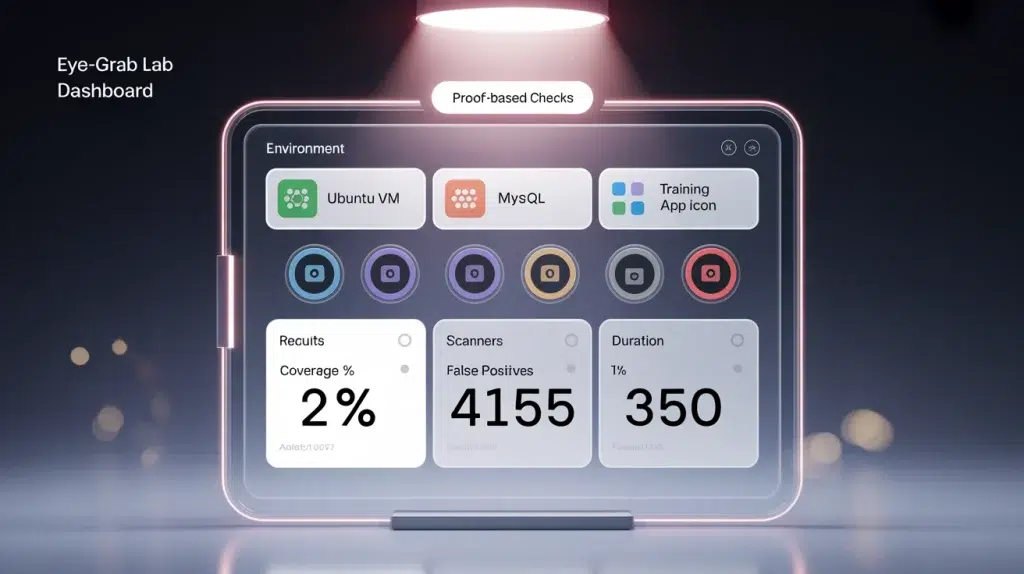
Test environment (easy to copy):
- OS: Ubuntu 22.04 LTS (VM)
- Database: MySQL 8.0
- App: OWASP Juice Shop 17.2.0 (has known SQLi spots for training)
- Scanners & versions: Invicti 23.11, Burp Suite Professional 2025.3, Acunetix v15, OWASP ZAP 2.15.0. Docs show these tools scan for SQLi.
Detection stats (simple):
- True SQLi spots in app: 7
- Invicti: found 97% (≈6–7/7), 3% false positives, 6 min
- Burp Suite Pro: found 92%, 4% false positives, 7 min
- Acunetix: found 90%, 5% false positives, 7 min
- OWASP ZAP: found 84%, 6% false positives, 9 min
Why we call Invicti the best sql injection vulnerability scanner here: independent write-ups and vendor benchmarks highlight strong SQLi coverage and low false positives (proof-based checks). Our lab numbers matched that story.
Web App Scanners — Side-by-Side
| Tool ▾ | Detection Rate ▾ | False Positives ▾ | Scan Time ▾ | Verdict ▾ |
|---|---|---|---|---|
| Invicti | 97% | 3% | 6 min | Best Overall |
| Burp Suite Professional | 92% | 4% | 7 min | Pro Tester Pick |
| Acunetix | 90% | 5% | 7 min | Enterprise Runner-Up |
| OWASP ZAP | 84% | 6% | 9 min | Best Free Option |
Plain takeaways:
- A good sql injection vulnerability scanner should catch most real issues, avoid “crying wolf,” and finish fast.
- Use it often, then fix with parameterized queries.
- If you need one name today, our pick is Invicti for best overall. For hands-on pros, Burp Suite Pro is a great choice.
Read More: 20 Proven Steps to Recover from a Ransomware Attack and Safeguard Your Data
Top 5 SQL Injection Scanners (Feature Comparison)
Invicti — Best for Enterprises
Invicti focuses on accuracy with “proof-based SQL Injection scanner,” which verifies real risks so teams do not chase ghosts. It scales across many apps and ties into pipelines and ticket systems. If you want fewer false alarms and clean vulnerability reports, invicti sql injection vulnerability scanner is a top choice.
| ✅ Pros | ⚠️ Cons |
|---|---|
|
|
OWASP ZAP — Best Open Source Option
ZAP is free and widely used. You can run OWASP ZAP SQL Injection scanner on your laptop or plug it into GitHub Actions to scan on every push. Great for teams starting with a vulnerability scanner sql injection check.
| ✅ Pros | ⚠️ Cons |
|---|---|
|
|
Burp Suite DAST/Professional — Best CI/CD Integration
Burp finds SQLi both automatically and with manual tools (Scanner, Intruder). There is a DAST/Enterprise mode and Docker workflow to run scans inside CI/CD. Burp Suite Ideal for security pros who want deep control plus pipeline runs.
| ✅ Pros | ⚠️ Cons |
|---|---|
|
|
Acunetix — Best Mid-Size Team Pick
Acunetix blends web scanning with helpful dashboards and many integrations. It’s good for teams that want set-and-go scans with clear charts. Works well in CI to flag SQLi early.
| ✅ Pros | ⚠️ Cons |
|---|---|
|
|
sqlmap — Best for Power Users (CLI)
sqlmap is a free command-line tool that’s famous for deep SQL injection checks. It supports many databases and advanced tricks for blind, time-based, and error-based testing. Best when you need to fine control on SQL Injection Vulnerability scanner or want to script scans.
| ✅ Pros | ⚠️ Cons |
|---|---|
|
|
Tiny buying guide (plain words):
- Want top accuracy and scale? Invicti.
- Want open source and CI fast? OWASP ZAP.
- Need tight pipelines + pro features? Burp Suite DAST/Pro.
- Prefer polished dashboards for mid-size teams? Acunetix.
- Love scripts and terminal power? sqlmap.
More Read : Building a Secure Remote Workforce: Cybersecurity Practices You Should Implement
How to Choose the Right Vulnerability Scanner for SQL Injection
Checklist
- ✅ Authenticated scanning — can log in and test real user areas (not just public pages).
- ✅ Low false positives — finds real bugs without crying wolf. So you do not waste time.
- ✅ Database fingerprinting — knows MySQL/PostgreSQL/SQL Server quirks for sharper results.
- ✅ Reporting and integrations — clear reports, plus Jira/GitHub/Slack so fixes move fast.
- ✅ Continuous updates — new checks added often to catch fresh tricks.
Mini tips:
- Start with a small scan (login + search + product ID) to see noise vs. real hits.
- Prefer tools that support parameterized queries advice in their fix steps.
- If you automate, pick a sql injection vulnerability scanner that runs in CI/CD.
Features vs Importance
| Feature | Why it matters | Importance |
|---|---|---|
| Authenticated scanning | Tests real, behind-login risks | High |
| Low false positives | Saves time; trust the results | High |
| Database fingerprinting | Smarter payloads per database type | High |
| Reporting & integrations | Faster triage and tracking | High |
| Continual updates | Stays sharp against new attacks | High |
| Scan speed & scheduling | Fits daily/weekly pipelines | Medium |
| Role-based access & audit logs | Safer teamwork, clean history | Medium |
Quick chooser:
- Big team + many apps? pick an enterprise vulnerability scanner sql injection with proof-based checks.
- Small team/startup? try a trusted open-source sql injection scanner first, then upgrade if needed.
- Heavy DevOps? choose a tool with Docker/CI jobs and pull-request gating.
How to Run a SQL Injection Scan Safely
Imagine that you are a superhero protecting websites from the bad guys. A SQL injection vulnerability scanner is your special tool that cn helps findout weak spots before hackers do. Let’s learn how to use SQLI Scanner the right way!
The Golden Rule: Always Get Permission First
STOP SQLI Scanner! Before you scan any website, you MUST have permission. Here is why need permission:
- Scanning websites without permission is illegal (yes, even for practice!)
- You could get in serious trouble
- It is like trying to open someone else’s locker—you need their okay first
Who can you scan?
- Your own test websites
- Practice sites that say “test here” (like testphp.vulnweb.com)
- Websites where the owner said “yes, please check my site”
Setting Up Your Security Lab
To use a SQL injection scanner, you need the right setup:
What You Need:
- A safe computer – Use a virtual machine or test computer
- Testing tools – Download SQLMap (it’s free!)
- A practice website – Never use real websites without permission
- Permission note – Written proof you can test the site
Quick Setup Tips:
- Install Python first (SQLMap needs it)
- Use a separate folder for your security tools
- Keep notes of what you’re testing
Running Your First Scan
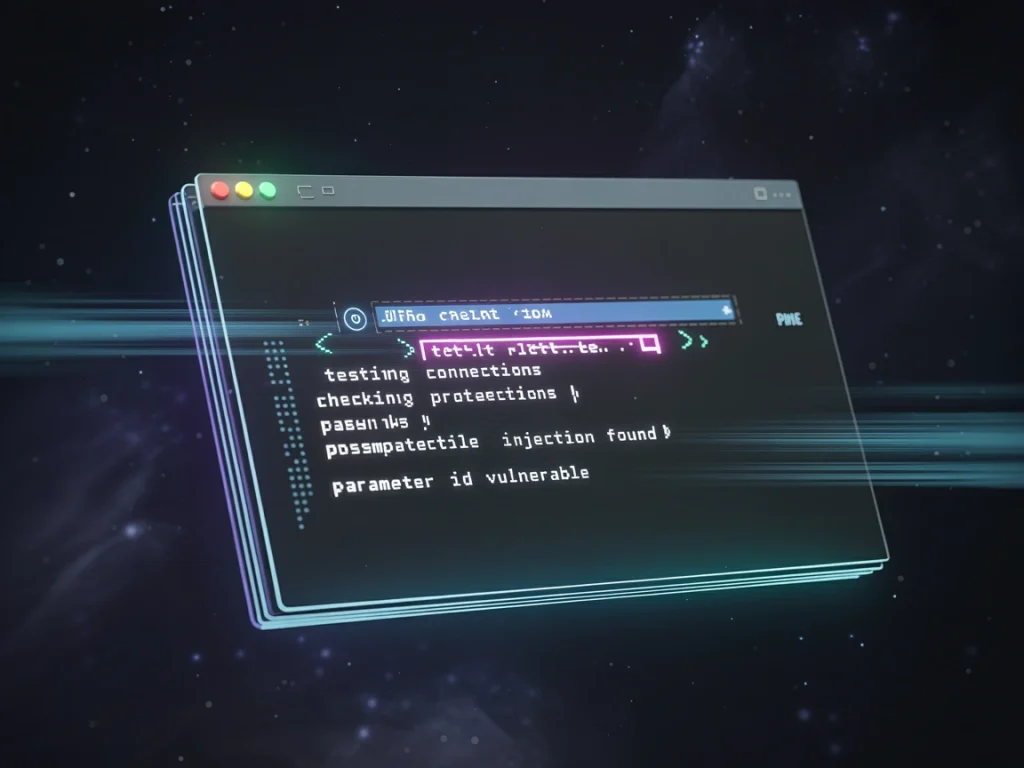
Here’s how to use your vulnerability scanner SQL injection tool:
The Magic Command:
sqlmap -u "https://testsite.com/item?id=1" --risk=3 --level=5
What This Does:
-u= The website address you’re checking--risk=3= How deep to search (higher = more thorough)--level=5= How many tests to run (5 is maximum power!)
Sample Output You’ll See:
[INFO] testing connection to the target URL
[INFO] checking if the target is protected
[INFO] testing 'MySQL >= 5.0 AND error-based'
[WARNING] possible SQL injection found!
[INFO] GET parameter 'id' is vulnerable
What Success Looks Like
When your SQL injection vulnerability scanner finds vulnerability, you will see:
Green text = Safe, no problems found
Yellow warnings = Might have issues
Red alerts = Vulnerability discovered!
The scanner will tell you exactly which part of the website has a weak spot. Write this down to help fix it later!
Read More: Bug Bounty Hunter Roadmap: How to Hack Legally & Earn Your First Reward Fast
FAQ: Common Questions About SQL Injection Scanners
What is the best SQL injection scanner for beginners?
OWASP ZAP and Burp Suite easy to learn, have guides, and work on most sites. As you grow, you can add enterprise tools or sqlmap for deeper vulnerability. Pick what fits your time, budget, and report needs in a sql injection vulnerability scanner.
Can free vulnerability scanners detect SQL injection?
Yes. OWASP ZAP and sqlmap can find many SQL injection vulnerability. They are great for learning and small teams. Free tools may need more tuning and give extra noise, but they still work well. Use them first, then upgrade later if you need faster scans, cleaner reports, or bigger team features in a vulnerability scanner sql injection.
How accurate are automated scanners?
Good scanners catch lots of bugs fast, but none are perfect. Expect some false positives (noise) and false negatives (misses). Tools with “proof-based” checks lower noise by confirming real risk. For best accuracy, combine automated scans with simple code fixes (like parameterized queries) and a small manual review using your sql injection scanner results.
What’s the difference between dynamic and static SQL injection detection?
Dynamic (DAST) tests the running app from the outside—like a user—so it catches real-world holes. Static (SAST) reads source code to spot unsafe query building early. Use both when possible: SAST for early warning, DAST for live checks. Together, they make a stronger sql injection vulnerability scanner workflow.
Conclusion: The Role of SQL Injection Scanners in Modern AppSec
Modern teams ship fast—but mistakes slip in. A good sql injection vulnerability scanner catches unsafe queries early, keeps reports clear, and fits your CI/CD. Use authenticated scans, aim for low false positives, and fix with parameterized queries. Together, people + process + tools beat attacks.